
{
“@type”: “Article”,
“author”: {
“url”: “https://angelalegh.com”,
“name”: “Angelalegh”,
“@type”: “Organization”
},
” />
“headline”: “Complete Guide to Emotional Contagion in Children”,
“publisher”: {
“url”: “https://angelalegh.com”,
“name”: “Angelalegh”,
“@type”: “Organization”
},
“inLanguage”: “en”,
“description”: “Emotional contagion explained: discover how it impacts kids, responses to bullying, and strategies for parents and teachers in this comprehensive guide.”,
“datePublished”: “2025-10-23T01:36:28.311Z”
}
Emotional contagion is a real thing. You may have walked into a room and immediately felt the energy of someone’s emotions. An angry man’s energy can feel like walking into a wall of heat, while a joyful person seems to brighten the whole space. These sensations aren’t imagined; they are part of how our nervous systems communicate.
When we see an emotion expressed, our brain activates mirror neurons, the cells responsible for empathy and imitation. These neurons allow us to feel what another person feels, often before we even have words to describe it. For children, whose emotional systems are still developing, this sensitivity is magnified. They absorb the emotional “weather” around them, picking up on tension, laughter, calm, or anxiety long before they can analyze what is happening.
Children can absorb the emotions of those around them just as easily as catching a yawn. Psychologists note that this happens almost automatically in early relationships. Nearly every child unknowingly mirrors the moods and reactions of parents, friends, and teachers, shaping how they connect, learn, and respond to the world.
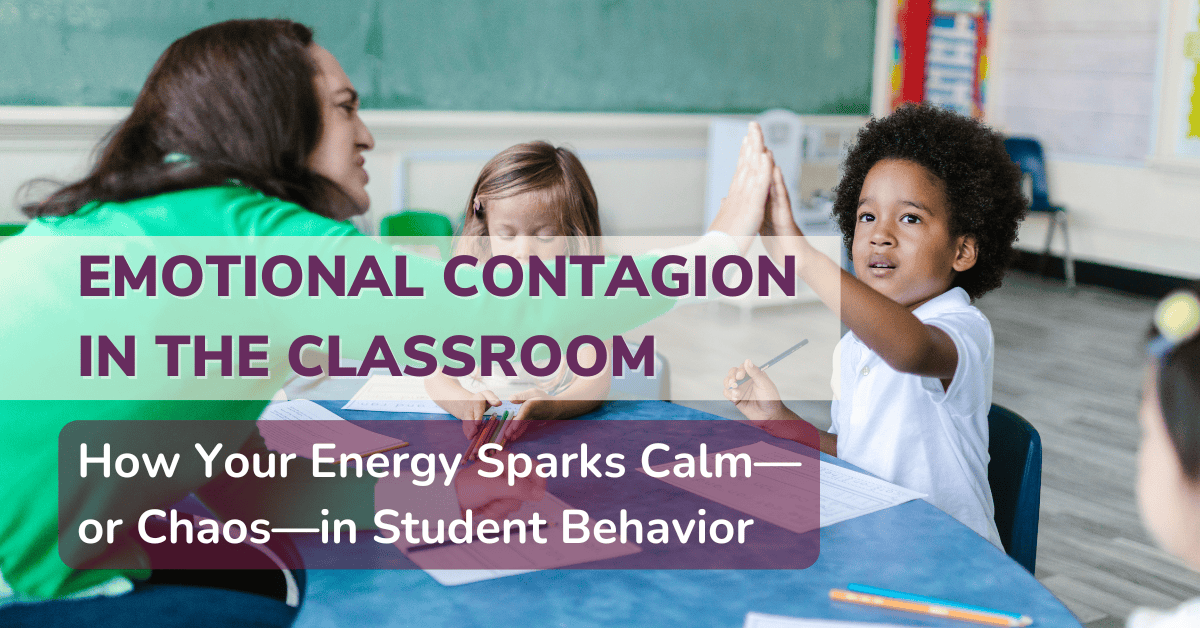
When a parent feels stressed, a child may tighten their shoulders without realizing why. When a teacher greets the class with calm confidence, children tend to settle into focus more easily. This invisible emotional exchange, known as emotional contagion, is not manipulation or mimicry. It is the heart’s natural language of empathy.
The Science Behind Emotional Contagion
Emotional contagion represents a fascinating psychological phenomenon where children unconsciously absorb and mirror the emotional states of those around them. It describes how emotions can spread between individuals like invisible waves, shaping a child’s emotional and social development in powerful ways. According to research from Cambridge University, this process involves automatic synchronization of facial expressions, vocal tones, and body language. In essence, a child’s nervous system “tunes in” to the emotional frequency of the people nearby.
At its core, emotional contagion works through subtle neurological mechanisms. Children naturally possess heightened empathetic capabilities that allow them to quickly pick up on emotional cues from parents, siblings, peers, and caregivers. As the Cleveland Clinic explains, this process happens subconsciously. Children often do not realize they are absorbing emotional energy from their surroundings; they simply feel it and respond.
When we understand this, we gain insight into how a parent’s calmness can create a sense of safety, and how unprocessed tension can ripple through a family. Awareness opens the door to transformation, because when we become conscious of the emotions we radiate, we begin teaching our children how to stay steady in the waves of life.
At its core, emotional contagion works through subtle neurological mechanisms. Children naturally possess heightened empathetic capabilities that allow them to quickly pick up on emotional cues from parents, siblings, peers, and caregivers.
Why Emotional Contagion Matters in Childhood Development
This unconscious emotional mimicry serves critical developmental purposes. It:
• Helps children learn social interaction skills
• Builds foundational emotional intelligence
• Promotes group bonding and connection
• Supports empathy development
Understanding emotional contagion provides powerful insight into how children learn emotional regulation and social communication. When a child sees a parent respond calmly during a stressful situation, that child is more likely to internalize the same emotional strategy. Calm becomes familiar, and peace feels possible.
How Bullying Spreads Hurt: The Cycle Explained
This cycle of hurt operates through deep emotional mimicry. Children who experience or witness bullying may unconsciously internalize these negative interaction patterns, later replaying them in their own relationships. In many cases, the victim becomes the aggressor, repeating what they have learned about power and pain.
When a child lives in an environment where control is used as a weapon, through anger, manipulation, or neglect, they often feel powerless. That sense of helplessness can be unbearable. To reclaim even a shred of control, they may begin to mimic what they have seen. A child who feels small at home might try to feel big at school. This does not come from malice but from survival. By exerting control over others, the child temporarily silences their own fear of being hurt again.
In this way, bullying is not only an act of aggression but also a distorted cry for safety. Recognizing this truth allows adults to respond not with discipline, but with compassion and guidance. The goal is not to excuse harmful behavior, but to heal the pain that drives it.
Why Others Join the Bullying Cycle
Emotional contagion helps explain why bullying rarely involves just one person. Feelings are energy in motion, and within a group setting that energy moves quickly. When fear, anger, or shame take hold, they ripple through peer networks like invisible waves, shaping attitudes and behavior.
This same dynamic appears throughout history and modern society. Emotional contagion can unite people through shared emotion rather than shared reason. When collective energy becomes charged with fear or anger, individuals may lose touch with their inner guidance and follow the dominant current. This pattern is not political; it is human. It helps explain how crowds, movements, or entire nations can unconsciously act from emotion rather than awareness.
In smaller but equally powerful ways, the same forces influence children and teens. Young people are especially sensitive to group energy. Their need for belonging can lead them to mirror whatever emotions seem to secure acceptance. If the dominant tone of a group is ridicule, others may laugh along even when their hearts whisper that it is wrong. If a leader acts with aggression, peers may copy the tone, believing it keeps them safe.
This form of emotional contagion transforms individual pain into collective behavior. It can turn bystanders into participants, not because they lack empathy, but because the pull of belonging feels stronger than the quiet truth of compassion.
Yet there is hope. The same energetic force that spreads cruelty can also spread kindness. When one person chooses calm, understanding, or forgiveness, that choice begins to ripple outward. Emotional contagion does not have to be destructive. When awareness meets empathy, it becomes a force for healing.
Key Dynamics That Fuel the Cycle
Once emotional contagion takes hold, group dynamics can intensify the spread of hurt. These are the most common patterns that keep bullying alive within social settings:
• Normalization of aggressive behaviors
Repeated exposure to cruelty can make harsh words and actions seem ordinary. Over time, what once felt wrong begins to feel acceptable, dulling the group’s natural sense of empathy.
• Social reinforcement of negative interactions
Peers may reward aggressive behavior with laughter, attention, or alliance. This reinforcement strengthens the bully’s actions and signals to others that power can come from intimidation.
• Emotional mimicry of hostile communication styles
When children see anger or sarcasm modeled, they often copy those patterns without realizing it. Emotional mimicry spreads tone and attitude as quickly as it spreads feeling.
• Reduced empathy through repeated exposure to aggression
Constant exposure to pain or cruelty can desensitize both witnesses and participants. The more often a child sees harm ignored or excused, the harder it becomes to connect with compassion.
Recognizing these dynamics allows adults to interrupt the flow of negative emotional energy before it takes root. Understanding this helps us see that breaking the cycle of bullying is not only about changing one child’s behavior. It is about shifting the emotional field that surrounds them. When kindness becomes the energy that spreads, the entire group begins to heal.
Breaking this cycle requires understanding its root causes. Often, children who bully are themselves experiencing pain, insecurity, or unprocessed emotional challenges. By recognizing bullying as a symptom of deeper emotional distress rather than a character flaw, parents and educators can approach intervention with compassion.
Emotional Safety: The Ground Where Healing Begins
Before emotional resilience can take root, emotional safety must be present. Children cannot build resilience in an environment that feels unpredictable, judgmental, or unsafe. Safety is what allows their nervous systems to relax enough to learn, feel, and grow.
Emotional safety begins when a child knows that all of their feelings—anger, sadness, joy, fear—are welcome and will not lead to punishment or rejection. In safe environments, children are encouraged to express themselves without harming others. This freedom allows them to learn self-awareness and compassion side by side.
The Bella Santini Emotional Journals, a free download when you purchase the first book in the series, Bella Santini in the Land of Everlasting Change, invite children to explore safety with prompts such as: “I feel safe when…” and “How can I safely show and process my feelings?” These questions guide reflection and help children identify what safety feels like in their body and relationships.
When adults model calm acceptance, children learn that emotions are not dangerous. They begin to trust that their inner world can be met with understanding instead of fear. Emotional safety, therefore, becomes the soil in which empathy and resilience can flourish.
Strategies for Teachers: Creating Safe, Kind Classrooms
Creating a safe classroom environment goes far beyond managing behavior. It means intentionally cultivating a culture of empathy, understanding, and mutual respect. According to research from PubMed, educators play a vital role in reducing negative peer interactions and promoting positive social development among students. In this way, classrooms can evolve from simple learning spaces into compassionate communities where every student feels valued and supported.
Teachers can interrupt the spread of negative emotional contagion by using proactive, relationship-centered strategies. Emotional safety forms the foundation for learning, allowing students to express themselves openly and authentically.
Key approaches to building kind classroom cultures include:
• Establishing clear, collaborative classroom agreements
When students co-create the rules, they feel a sense of ownership and accountability that creates mutual respect.
• Modeling emotional intelligence and respectful communication
Children learn far more from what they witness than what they are told. A calm, respectful tone teaches more than any lesson plan ever could.
• Creating regular opportunities for peer connection and empathy building
Circle time, partner reflections, and gratitude shares strengthen bonds and reduce isolation. For teachers who want to deepen this practice, a free Compassion Curriculum is available in the Teacher Resource Center at AngelaLegh.com, This curriculum offers ready-to-use activities that nurture empathy, mindfulness, and kindness in every classroom.
• Implementing restorative rather than punitive approaches to conflict
When harm occurs, invite reflection and repair rather than shame. Restorative justice focuses on healing the relationship, not punishing the person. It encourages open dialogue, helping students understand how their actions affected others and how they can make amends. This approach restores trust and empowers everyone involved to take responsibility for creating a safer, more compassionate community. Over time, students begin to see that every conflict holds an opportunity for growth, understanding, and reconnection.
• Celebrating individual and collective emotional growth
Acknowledging small acts of kindness or self-awareness helps normalize emotional maturity as a shared classroom value. Yet celebration can go beyond praise; it becomes a way of weaving empathy into the fabric of daily life. When teachers highlight moments of compassion, forgiveness, or teamwork, students begin to see these as true accomplishments worth striving for. Over time, the classroom transforms into a living model of respect and understanding. Children learn that success is not only measured by grades or performance, but also by how gently they treat themselves and others. In this culture of empathy and kindness, emotional safety and learning thrive side by side.
When teachers embody empathy and emotional awareness, students begin to mirror that energy. Over time, kindness becomes contagious.
The most powerful teaching happens when educators recognize that social-emotional learning is not a separate curriculum, but an integrated approach to human development. By consistently demonstrating compassion, actively listening to students, and creating spaces where vulnerability is seen as strength, teachers can transform classrooms into environments where emotional resilience flourishes. This approach doesn’t just prevent negative behaviors it actively cultivates a generation of emotionally intelligent, empathetic young people who understand the profound connection between understanding oneself and understanding others.
Guidance for Parents: Listening and Teaching Compassion
Parents play a crucial role in shaping their children’s emotional intelligence and their ability to communicate with compassion. According to research from PubMed, daily parent-child interactions are fundamental in building emotional understanding and resilience. This means creating intentional spaces where children feel truly heard and validated, not just corrected or managed.
Teaching compassion is an ongoing process that grows through patience, self-awareness, and genuine connection. Active listening is the cornerstone of this process, transforming everyday conversations into moments of deep understanding.
Parents can cultivate compassionate communication through several intentional practices:
• Pause and give full attention when children speak
Presence teaches children that their voice matters. A child who feels heard learns to listen in return.
• Reflect back what you have heard without judgment
Mirroring allows a child to feel seen, valued, and emotionally safe. When parents repeat back a child’s words or describe what they sense the child is feeling, it communicates respect for their inner experience. Instead of rushing to correct or fix the problem, the parent becomes a calm mirror that says, “I hear you, and your feelings matter.” This quiet reflection helps diffuse emotional intensity and teaches children to name and process their feelings. Over time, it strengthens trust and invites honest communication even in moments of tension.
• Ask open-ended questions that invite deeper sharing
Curiosity opens the door to trust. When children sense genuine interest, they learn to explore their emotions instead of hiding them.
• Validate emotions before offering solutions
Validation helps children feel accepted exactly as they are. Before giving advice or redirection, take a moment to acknowledge the feeling itself: “That sounds frustrating” or “I can see this made you sad.” This brief pause communicates empathy and emotional safety. Once a child feels understood, they become more open to guidance. In that moment, connection paves the way for growth.
• Model emotional vulnerability and honest communication
When parents share their own emotions with calm honesty, they show that feelings are normal and manageable. Saying “I felt disappointed today, but I took a few breaths to calm down” teaches emotional regulation more powerfully than any lecture could. Vulnerability invites closeness. It shows children that strength is not the absence of emotion but the ability to meet emotions with awareness and care.
The most profound lesson in compassion does not come from words but from lived experience. Children learn empathy by feeling it directed toward them. This means showing compassion not only to them, but also to oneself and to others within the family system. When parents model patience, understanding, and emotional generosity, they create a living example of how love communicates. Through this consistent modeling, even moments of conflict become opportunities for healing and deeper connection.
Storytelling and The Bella Santini Chronicles as Tools
Storytelling emerges as a powerful vehicle for emotional learning, transforming complex psychological concepts into accessible, engaging narratives that children can deeply understand. According to research from ArXiv, stories like The Bella Santini Chronicles offer more than entertainment they provide nuanced pathways for exploring emotional intelligence, empathy, and interpersonal dynamics. You may learn more about how stories teach in this blog post on how stories teach concepts in ways lectures cannot.
The narrative approach to social-emotional learning creates immersive experiences that allow children to explore challenging emotions and behaviors through character journeys. By witnessing characters navigate complex emotional landscapes, children can develop critical insights into their own experiences.
Key benefits of story-based emotional education include:
- Providing safe emotional exploration spaces
- Demonstrating healthy conflict resolution strategies
- Normalizing complex emotional experiences
- Offering alternative perspectives on challenging situations
- Creating empathy through character identification
The Bella Santini Chronicles specifically transform emotional education from a didactic process into an adventure of discovery. These stories do more than teach they invite children to see themselves and their emotional experiences as part of a larger, interconnected human experience. By presenting characters who struggle, learn, and grow, the chronicles model emotional resilience not as a destination, but as an ongoing journey of understanding, compassion, and personal transformation.

A Gentle Invitation
Emotional contagion, bullying, and safety are all part of the same truth: we are connected through feeling. When adults model calm, empathy, and self-awareness, children learn that emotions can be understood, not feared.
You can explore more resources, guides, and story-based lessons at AngelaLegh.com, where imagination and emotional learning walk hand in hand. Together, we can create homes and classrooms that reflect what every heart longs for, understanding, safety, and love.
Frequently Asked Questions
What is emotional contagion in children?
Emotional contagion in children refers to how feelings spread between people. Children naturally absorb and mirror the emotions of parents, peers, and teachers, often without realizing it. This process shapes their empathy, social awareness, and sense of safety in relationships.
How does emotional contagion contribute to bullying behavior?
Emotional contagion can amplify negative emotions within groups. When fear, anger, or ridicule dominate a peer setting, others may unconsciously join in to feel accepted. This collective energy can turn bystanders into participants, showing how bullying becomes a shared emotional pattern rather than the act of one individual.
Why is emotional safety important before teaching resilience?
Children cannot build resilience until they feel safe. Emotional safety gives them permission to express feelings honestly without fear of rejection or punishment. Once a child feels seen, heard, and accepted, they can begin learning how to navigate emotions with awareness and strength.
What strategies help teachers create emotionally safe classrooms?
Teachers can build emotionally safe learning spaces by setting collaborative agreements, modeling empathy, and using restorative approaches to conflict. Practices such as gratitude circles and peer reflection promote connection and reduce isolation. Emotional safety becomes the foundation where curiosity and learning thrive.
How can parents model compassion and emotional awareness at home?
Parents create emotional safety by listening with full attention, reflecting what their children feel, and validating emotions before offering solutions. Modeling calm honesty and vulnerability teaches children that all emotions can be understood and transformed through compassion.
